
TULSA-PRO · Prostate treatment evidence
TULSA-PRO clinical studies: how to compare the evidence
There is no single TULSA success rate. First ask who was treated, what was measured and how long they were followed. Cancer on a biopsy, needing more treatment, symptom relief and recovery each answer a different question.
Medically reviewed by Michael O. Koch, MD · September 23, 2026 · Updated September 30, 2026
The evidence, study by study
| Evidence | Who and how | What it can and cannot tell you |
|---|---|---|
| TACT | 115 men with localized cancer at 13 centers. One group, no comparison. Whole gland treated. Reports at one and five years. | Shows results after that plan. It is not a randomized comparison with surgery or radiation. |
| Cancer phase I follow-up | 30 men enrolled. A cautious plan that left some tissue untreated. Three-year report. | Gives a longer look at an early plan. Men who dropped out and the untreated tissue both matter. |
| BPH phase I and phase II | Two separate groups of 10 and 30 men, each at one center. No comparison group. One-year reports. | Looks at urinary symptoms and flow. These are not cancer studies or long-term comparisons. |
| Salvage phase I and phase II | Two separate groups of 11 and 39 men whose cancer came back after radiation. | Covers men treated before. Serious urinary harms must be read next to the treated-area results. |
| CAPTAIN | 211 men with Grade Group 2 or 3 cancer at 23 centers, randomly assigned to TULSA or robotic prostate removal (NCT05027477). | A 2026 abstract reports early recovery. Long-term cancer control is a separate question that is not yet answered. |
What is the latest from the randomized trial?
CAPTAIN reported its first results in a 2026 conference abstract. Men were randomly assigned, two to TULSA for every one to surgery. In the first month, TULSA patients had less blood loss and less pain. Most went home the same day. They returned to normal activities and overall health sooner. The catheter stayed in longer after TULSA: a median of 13 days versus 8. Dr. Koch notes this shows TULSA is better for early quality of life and return to normal activity, but there is no data yet on cancer control. The main results come later: leakage and erections at one year, further treatment at three years and survival up to ten years. Read abstract 369. The trial record describes the full study plan.
When new results appear, first check the type of report. It could be a full peer-reviewed paper, a trial-registry result, a conference abstract or a company announcement. Then ask whether it reports the planned comparison, how many men were counted and how long they were followed. A headline can leave out the result that matters most to you.
Read the TACT follow-up as two separate questions
Was cancer found? At one year, 39 of 111 biopsies showed some cancer (35%). In 22 of those men it was only Grade Group 1 (Gleason 6), the lowest grade.
Was more treatment given? By five years, 25 of the 115 men who started (22%) had more treatment.
Dr. Koch puts it this way: only about 20% needed further treatment at five years, but about twice that had cancer on a biopsy. The difference, he says, is mostly small Gleason 6 cancers being watched with active surveillance. Do not subtract these percentages. Do not call the five-year retreatment result a cancer-free rate. The timing, the number of men counted and the meaning all differ. Biopsy results. Five-year abstract.
Five checks before you trust a success rate
- Who was treated: Men with untreated localized cancer, BPH, or cancer that came back after radiation? Were they chosen in a way that makes them different from you?
- How much was treated: Part of the prostate, half or the whole gland? What was left alone on purpose?
- What was measured: PSA, biopsy results, symptoms, urine flow, function, more treatment or spread?
- How many were counted: How many men started, how many had the test, and how were missing results handled?
- How long, and compared with what: Is it a one-year result, a longer follow-up or a later statistical estimate? Was there a comparison group treated at the same time?
A useful answer covers all five. If a benefit and a harm come from different groups of men, ask the doctor to say so before you weigh them.
Read safety results next to success results
A report can show that tissue was destroyed or symptoms improved. The same report can show serious complications. Both are part of the result. The phase II study after radiation is a clear reason not to carry risks from one group of men over to another. The BPH studies also need their side effects read next to the better symptom scores.
Ask for your urinary and sexual function before treatment as well as after. Ask whether a count is the number of events or the number of men affected. For a center’s own results, ask for the same definitions and follow-up used in the published study before you compare them.
Keep FDA evidence in its own category
The FDA clearance describes the device and its approved use: destroying prostate tissue. It does not replace studies of results for a given disease. Material from the device maker can help explain the procedure. But it is company material, not an independent study that compares treatments. FDA clearance. FDA guidance on disease claims.
The best next step is not to pick the most impressive number. Ask your doctor which study best fits your diagnosis and planned treatment. Ask what is still uncertain. And ask how both benefits and harms will be tracked.
Take these questions to your care team
Modern Prostate Institute does not offer patient intake or TULSA provider matching. Talk with your own doctor or a hospital urology service about your records and options. Do not send medical records through a public contact form.
Read our care-navigation guidance →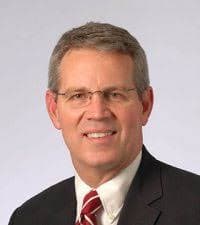
Medically reviewed by
Michael O. Koch, MD
John P. Donohue Professor of Urology at Indiana University School of Medicine. He chaired the university’s urology department from 1998 to 2024. Dr. Koch reviewed these TULSA pages on September 23, 2026 and sent the corrections included here. He is an author of the TACT five-year and CAPTAIN reports cited on these pages.
About Dr. Koch and his review →