
TULSA-PRO · Prostate treatment evidence
TULSA-PRO for localized prostate cancer: what the results show
TULSA can destroy prostate tissue in some men whose cancer has not spread outside the prostate. You still need cancer follow-up afterward. A lower PSA, a biopsy with no cancer and never needing more treatment are three different results.
Medically reviewed by Michael O. Koch, MD · September 23, 2026 · Updated September 30, 2026
Start with the cancer, then talk about the device
“Localized” means the cancer seems to be only in the prostate. That is a starting point, not a full treatment decision. Your risk group matters. So do your biopsy results, PSA, stage, health and wishes. Depending on your case, the choices may include active surveillance, surgery, radiation or others. Active surveillance means watching the cancer with regular tests instead of treating it now. A TULSA visit should explain where it fits among these choices, and why. The National Cancer Institute describes treatment by stage.
Bring your pathology (biopsy) report and your imaging report. Ask the doctor to separate what a biopsy has confirmed from what imaging only suggests. If only part of the prostate would be treated, ask what might be outside that area.
What each TACT number means
TACT treated 115 men at 13 centers. Most had intermediate-risk cancer. Each man had the whole gland treated, while sparing the urethra and the muscle that controls urine flow. The one-year results describe that plan and those men. They do not describe every partial (focal) treatment plan. Main TACT report.
| Result | What it measures | What it does not prove |
|---|---|---|
| 110 of 115 (96%) met the PSA goal | PSA fell by at least 75% after treatment. | That all cancer was destroyed, or that more treatment will never be needed. |
| 72 of 111 (65%) had no cancer on the one-year biopsy | A tissue test in the men who had that biopsy. | A lifetime cure rate. It is also a different result from the PSA goal. |
| 9 of 115 (8%) had grade 3 side effects in the first year | Serious side effects, using the study’s grading system. | Your own risk. It also does not apply to tissue treated with radiation before. |
Notice that the totals differ: 115 men in one row and 111 in another. Ask how many men were due for each test, how many had it, and what happened to the men who missed it. A percentage means more when you can see those details.
Cancer on a biopsy and needing more treatment are different results
One year after TULSA: 39 of 111 men (35%) had some cancer on the biopsy. In 17 of them (15% of 111), it was Grade Group 2 or higher. The other 22 had only Grade Group 1, also called Gleason 6. That is the lowest grade. One-year biopsy report. Five-year report.
Five years after TULSA: 25 of 115 men (22%) had more cancer treatment. Ten had prostate removal, 11 had radiation, 3 had hormone therapy, and 1 had surgery plus radiation. Five-year report.
Dr. Koch sums it up this way. Only about 20% of men needed further treatment at five years. But about twice that had cancer still present on a biopsy. He explains that the difference is small Gleason 6 cancers that are being watched with active surveillance. Finding cancer does not always mean treatment starts right away. So a retreatment rate should never be shown as the share of men with no cancer left.
Why longer follow-up needs careful reading
An earlier phase I study started with 30 men. Twenty-two completed three years of follow-up. On purpose, its plan left a thin rim of prostate untreated. By three years, seven men had more treatment for cancer that came back. This was a different plan and a different group from TACT. It shows why follow-up must continue. It also shows the danger of blending unlike studies into one success rate. Read the three-year phase I report.
In the TACT five-year report, 61 of 66 men (92%) did not need pads for leakage. And 80 of 92 men (87%) kept erections firm enough for sex. Each result counts only the men with information for that measure, so the totals differ. Five-year report.
Ask what “success” means in your care plan. It could mean no cancer on a planned biopsy. It could mean no significant cancer, no more treatment, or no spread. These answer different questions. Your plan should also say what happens next if cancer remains or returns.
Is TULSA proven to work as well as prostate removal?
Not yet. The CAPTAIN trial is testing this. It randomly assigned 211 men with Grade Group 2 or 3 cancer to TULSA or robotic prostate removal (prostatectomy). About 7 in 10 got TULSA. Early CAPTAIN results. Trial record.
Its first report, a 2026 conference abstract, covered the first month. TULSA patients lost less blood and had less pain. They went home the same day. Fewer of them said they were completely unable to walk about, care for themselves or do usual activities that month. Their rating of their overall health also dropped less over the first 30 days. But the catheter stayed in longer: 13 days versus 8. Dr. Koch notes that this report shows TULSA is better for early quality of life and return to normal activity. It has no data yet on how well TULSA controls cancer. Results for leakage and erections at one year, and for further treatment at three years, are still to come.
For a visit now, ask your team to be direct about what is unknown. Which results come from a published study of men like you? Which comparisons rely on separate studies instead of a randomized trial? What new evidence would change the advice?
Questions for your treatment decision
- What is my confirmed risk group? Why is treatment better than active surveillance for me?
- Would you treat part of the prostate or the whole gland? What tissue would be left untreated?
- Which published study group is most like me, including past treatment and length of follow-up?
- How will you measure cancer control separately from urinary and sexual function?
- What is my follow-up schedule? Who talks with me about more treatment if a test is worrying?
Take these questions to your care team
Modern Prostate Institute does not offer patient intake or TULSA provider matching. Talk with your own doctor or a hospital urology service about your records and options. Do not send medical records through a public contact form.
Read our care-navigation guidance →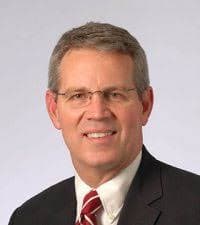
Medically reviewed by
Michael O. Koch, MD
John P. Donohue Professor of Urology at Indiana University School of Medicine. He chaired the university’s urology department from 1998 to 2024. Dr. Koch reviewed these TULSA pages on September 23, 2026 and sent the corrections included here. He is an author of the TACT five-year and CAPTAIN reports cited on these pages.
About Dr. Koch and his review →