
Medical reviewer
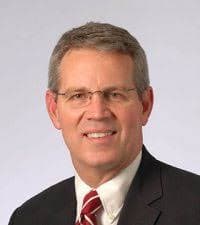
Michael O. Koch, MD
John P. Donohue Professor of Urology at Indiana University School of Medicine. Dr. Koch reviewed our TULSA-PRO guides on September 23, 2026.
Background
Dr. Koch joined Indiana University School of Medicine in 1998 as chair of its Department of Urology. He led the department for 26 years. Before that, he spent 12 years on the faculty of Vanderbilt University.
He earned his medical degree at Dartmouth. He completed an internship at Dartmouth-Hitchcock Medical Center and his residency at Vanderbilt University. He has been board certified since 1983 and is a fellow of the American College of Surgeons. He is a past president and trustee of the American Board of Urology. In 2015, the American Urological Association gave him its Distinguished Contribution Award.
His clinical work centers on bladder and prostate cancer. IU Health lists robotic surgery, HIFU and focal therapy for prostate cancer, and adult urinary tract reconstruction among his areas of care. His faculty profile notes more than 250 peer-reviewed publications and his early role in bringing high-intensity focused ultrasound (HIFU) to prostate cancer care.
His connection to TULSA research
Dr. Koch is one of the authors of two reports cited in our guides: the 2024 TACT five-year follow-up abstract and the 2026 CAPTAIN early-results abstract. In the published author disclosures for the CAPTAIN abstract, he reported no financial relationships. The device maker’s provider directory lists him as a TULSA practitioner at Indiana University. We share these facts so readers can weigh the review.
Reviewer credit does not mean that Indiana University or IU Health endorses this website.
What he reviewed
Dr. Koch reviewed the TULSA-PRO overview and its six guides. His September 23, 2026 comments asked for easier reading and added four clinical points:
- Most men need a catheter for about two weeks after whole-gland treatment, and trouble passing urine can last longer.
- Infection is a real problem, because bacteria can live in the bladder and treated prostate tissue dies.
- In TACT, only about 20% of men needed further treatment by five years, while about twice that had cancer on a biopsy. The difference is mostly small Gleason 6 cancers under active surveillance.
- CAPTAIN’s first report shows TULSA is better for early quality of life and return to normal activity, but it has no data yet on cancer control.
The pages were rewritten in plainer language on September 30, 2026 to include those points.
- How the TULSA procedure works: planning, treatment day and recovery
- TULSA-PRO for localized prostate cancer: what the results show
- Focal therapy and TULSA-PRO: understanding the treatment area
- TULSA-PRO for BPH: early results for blocked urine flow
- TULSA after radiation: checking the cancer and the urinary risks
- TULSA-PRO clinical studies: how to compare the evidence
Biography sources
Checked September 30, 2026.