
TULSA-PRO · Prostate treatment evidence
Focal therapy and TULSA-PRO: understanding the treatment area
Focal therapy treats only part of the prostate. TULSA is a device that can treat a small area or the whole gland. Ask your doctor to show you what will be treated and what tissue will be left.
Medically reviewed by Michael O. Koch, MD · September 23, 2026 · Updated September 30, 2026
The treatment area is part of the decision
Comparing “TULSA” with “focal therapy” can mix up two things. TULSA is a way to deliver heat. Focal therapy is a decision about how much tissue to treat. A useful first step is a drawing of the area your doctor plans to treat. Ask what evidence was used to choose it.
The FDA device papers describe planned, MRI-guided treatment. They do not set one right treatment area for every cancer. That choice depends on your test results and your care team. FDA description of the system. In the CAPTAIN trial, 68% of TULSA plans treated the whole gland. The rest (32%) treated at least half of it. CAPTAIN treatment plans.
| Term you may hear | What to ask the team to show you | Why it matters |
|---|---|---|
| Focal or partial-gland | The target, the safety margin around it and the tissue that will be left untreated. | A good result inside the treated area says nothing about the rest of the gland. |
| Whole-gland | How much of the gland will be treated and which parts will be spared on purpose. | Even this term needs a clear definition. Study plans can differ. |
| In-field or target-area result | The exact area that was checked after treatment. | Cancer outside that area is a separate finding. A good target-area result does not rule it out. |
A whole-gland study does not predict focal results
TACT treated the whole gland while sparing some tissue on purpose. So its results cannot simply be shown as the results of a smaller focal plan. The earlier phase I plan left a 3-millimeter margin on purpose, sparing about 10% of the outer prostate. That is another reason to read how a study was done before you compare percentages. TACT plan and results. Phase I follow-up.
The same care applies across diagnoses. In an 11-man study of TULSA after radiation, 10 men had no cancer in the treated area at one year. But 2 men had cancer outside the treated area. That example shows what “in-field” means. It is not a risk estimate for a man with untreated cancer who is thinking about focal therapy. Phase I report after radiation.
Ask for a treatment map
A map makes the visit concrete. Ask the doctor to separate what is confirmed, what is suspected, what will be treated and what is still unknown.
- The cancer map: Which biopsy and imaging findings are being used? Do they agree?
- The treatment map: Which tissue is included? What margin is planned? What will be left untreated?
- The function talk: What urinary and sexual results are you aiming for? What risks remain? Which men like me support these estimates?
- The follow-up map: How will you check both the treated and untreated areas over time?
- The next-step map: What happens if cancer is found in the treated area, elsewhere in the gland, or outside the prostate?
Saving tissue and controlling cancer are separate goals
A smaller treatment area does not prove the cancer was treated well enough. It does not guarantee that function will be saved. Ask the team to explain the trade-off and the evidence for it. The talk should cover the choices that fit your risk group, including whether you need treatment now at all. NCI treatment overview.
Before you choose, ask for a written plan for follow-up tests and the chance you will need more treatment. A less invasive procedure can still mean years of follow-up. If two centers use different words for the same plan, compare their actual maps and definitions, not the labels.
Take these questions to your care team
Modern Prostate Institute does not offer patient intake or TULSA provider matching. Talk with your own doctor or a hospital urology service about your records and options. Do not send medical records through a public contact form.
Read our care-navigation guidance →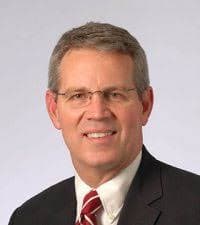
Medically reviewed by
Michael O. Koch, MD
John P. Donohue Professor of Urology at Indiana University School of Medicine. He chaired the university’s urology department from 1998 to 2024. Dr. Koch reviewed these TULSA pages on September 23, 2026 and sent the corrections included here. He is an author of the TACT five-year and CAPTAIN reports cited on these pages.
About Dr. Koch and his review →